Unknown's avatar

About thinkinetic

Interested in computer graphics and visual FX.

Explorer of New Worlds Challenge Winners Announced

Humster3d competition “Explorer of New Worlds ” announces the winners, each of them will receive  a Pulldownit Pro license among other valuable prices,

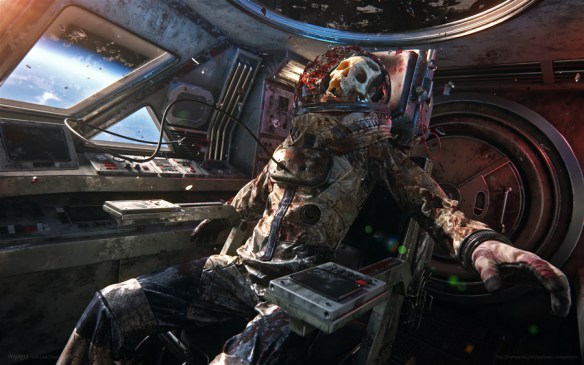
First Place: Voyager by Luis Lara

Voyager_blog

Tools used: 3ds Max, Zbrush, Substance Designer, Corona and After Effects

Second Place: Child dream by Evgeniy Shatohin

Child_dream_blog.jpg

Tools used: 3ds max, Mudbox, Corona renderer, Marvelous Designer and Photoshop

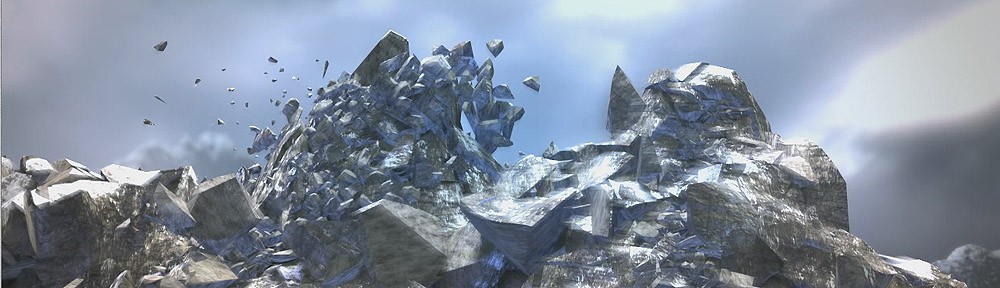
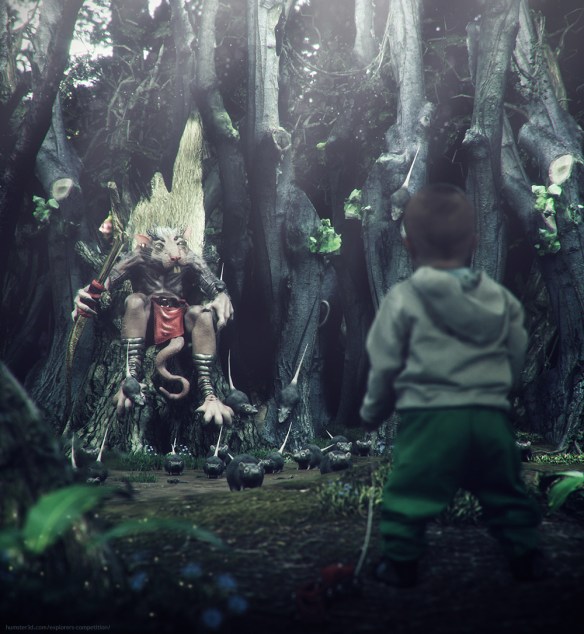
Thinkinetic Team Choice: Exploring the Rat Kingdom by Sedat Açıklar

Rat_Kingdom.jpg

congratulations to all of them!, more info and other awarded images in the oficial site,

Explorer of New Worlds Winners Announced


Thinkinetic sponsor of Hum3D Competition

HD_Banner_Station

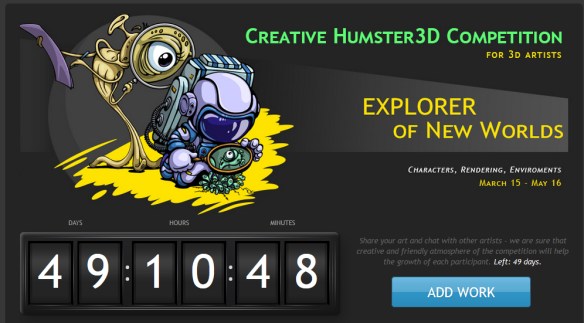
Thinkinetic is proud sponsor of “Explorer of the New Worlds” challenge by Hum3D,

Think out and create in any 3D software an explorer of new worlds at the time of his or her adventures and create also some environment around him. You can summit your work until 16 May.

Pulldownit Pro license is one of the valuable prizes and there are plenty of them, in addtion to one node-locked license of Pulldownit Pro for the best video or picture with your character in the WIP forum.

Those interested can check rules and prizes here:

http://humster3d.com/explorers-competition/


Chang Metamorphosis by Artem Paramonov

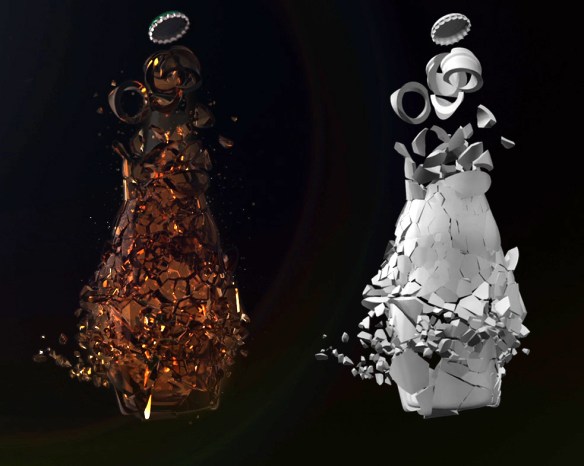
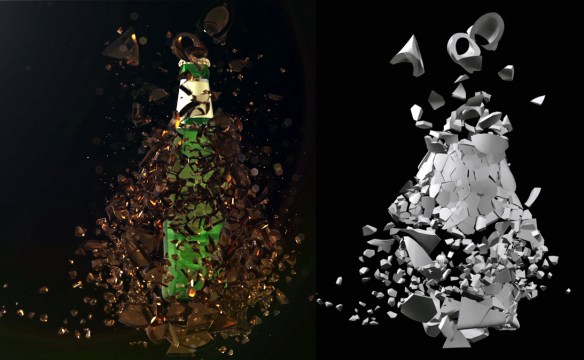
Artem Paramonov show us this great breakdown he made for a Chang beer commercial, Pulldownit was used for shattering the bottle,  Artem kindly explain several technical details below.


My name is Artem Paramonov, I’m senior 3D creative. This project was done for Iris Sydney, we’ve got a brief from the client to create a stunning animation of a bottle being shattered. The most difficult part of it was of course the simulation itself, and this is where PulldownIt did what it does best – simplified everything.

The tricky part was to make shattering simulation controllable, to start in specific areas and follow up with a general explosion. We also wanted to do it in a bullet time manner to make it look a bit more dramatic. So we, basically, had 2 waves of explosion – first to break apart everything and second to blow all pieces off the screen.

compo1

It was really great being able to define how bottle will be shattered, where the big chunks will form and where we will get the small pieces. Now, slowing down the existing animation and then speeding it up could be generally quite tricky, so once I was happy with simulation results I baked everything into a keyframes and after that into a geometry cache – this gave me a flexibility to re-time it the way I wanted to. Shockwave effects were created later on in After Effects with a standard effect called CC Ripple Pulse. After rendering primary simulation I also rendered a still 2k image, to use different pieces for 2D particles and “dust”. Finally assembling everything in After Effects.

compo2b

Overall experience with Pulldownit is just so sleek – that I was even a bit overwhelmed when I got my results that fast. I could play with it for weeks – it is very enjoyable to use it. It is stable, predictable and it just Works!

Breaking Letters Demos by Esteban Cuesta

These are the  breaking letters demos Esteban Cuesta made  as a final example of his tutorials on shattering text with Pulldownit plugin, you can find this tutorial a couple of articles below. Esteban Cuesta kindly explains some details about the making steps.


I wanted to make a video as a final demostration of my breaking letters tutorials with Pulldownit 3.7, I designed demo #1 as a classic letters intro, quick and lively, the motion of each word is animated until it touch the word below, then I activate the fracture bodies so pieces of letters start to crumble and fall, I used a Wind field to stress the debris falling effect. The final destruction was as easy as animating the word “Pulldownit” so it pass through the whole text and set it is a kinematic rigid body but I switched to “Convex hull” Bounding Volume to speed up the testing, the dynamics looked good anyway so I used it for the final shot too.

Doing the first shot wasn’t difficult at all and pretty funny, this encouraged me to make a longer one. This time a decided to add a plate showing the different shatter styles of Pulldownit with letters, all styles except “Wood splinters” as I think this style doesn’t make sense for letters.


All sets are done in the same way, using the 3D Max text tool to generate each word and making the endings fit each other simply by adjusting text size and kerning, and then collapsing all the words in a single poly object. At this point I applied the intended shatter style and create a fracture body for all pieces. For the Radial style plate I used an animated sphere to trigger the destruction, I simply hid it when rendering the scene, for the Path style I used the great crackers objects of Pulldownit as triggers, the rest of plates uses a Wind field to trigger the destruction, animating its Strength in order to get a increasing amount of falling debris.

Rendering was done using Mental ray in 3D Max, applying a high reflectance material to the letters and a less polished glossy material with the same colour to the inner faces after breaking.

Pulldownit worked very well , I haven’t any issue aside tweaking the parameters to get the dynamic behavior I wanted, It was very intuitive and fast computing using it.

2015 blog review

Happy new year from Thinkinetic, glad to tell you this blog has got about 18,000 views in 2015, thats quite a lot for this kind of blog, we are proud of it and like to share some stats with  our readers, thank you to WordPress team for providing us the annual stats.

These are the posts that got the most views in 2015:

1- Pulldownit update 3.5 with new features

2- Breaking columns with Pulldownit 3 and adding particles debris

3- UFO attacks “Puerta de Alcalá”

The busiest day of the year was November 2nd with 359 views. The most popular post that day was Pulldownit update 3.5 with new features. Our readers come from 145 countries, wow, most of them are from United States, India and Japan.

BlogAudienceShart2015

So we will continue announcing in this blog all our news and publishing quality case studies and tutorials about the use of Pulldownit plugin, Thank you for following us.


Pulldownit Update 3.7

MD_Banner3-7b

Our main focus in this update has been to increase plugin reliablity and improve to the maximum several already outstanding features. All reported bugs so far have been fixed, working with hi-poly meshes for shatter and dynamics is faster and several options for fracturing has been adjusted following users experience, thanks to all that contribute to continuously improve Pulldownit plugin.

Besides Shatterit tool has been enhanced to break holed shapes like 3D letters correctly, watch shattering  letters intro and video tutorials by Esteban Cuesta

Shattering Letters 3D Max Video Tutorial

Shattering Letters Maya Video Tutorial


v 3.7 Enhancements:

  • Perfect shattering of holed concave shapes like 3D letters
  • 20% speed up shatter for hi-poly meshes
  • Improved behavior of fracture bodies option “Break Upon Impact” specially with force fields
  • “Force convex shapes” is now the default for fracture bodies creation, allowing very fast and stable fracture dynamics in most cases.

Fixes for 3ds Max plugin:

  • Fixed rigid body masses overrided after reseting scene
  • Fixed jagginess doesnt apply to fragments with multi uvs
  • Fixed shatter crash when non-convex faces are present
  • Fixed seed 0 doesnt generate diferent point cloud each time
  • Fixed Radial shatter generated aligned points on the borders
  • Fixed fragments slide weirdly on the grid plane
  • Fixed 3d Max crash when apply jagginess to concave faces
  • Fixed 3d Max crash sometimes after making scene->new and resetting simulation
  • Fixed 3d Max crash after shattering an object with modifiers applied sometimes
  • Fixed shatter preview point cloud weird displacement with excentric objects
  • Fixed Fracture bodies attach nearby fragments each other regardless threshold sometimes
  • Fixed Fracture bodies ignores breakable by frame clusters when fragments are sleeping

Fixes For Maya Plugin:

  • Fixed local shatter pivot doesnt fit to surface by default
  • Fixed missed normals for holed faces
  • Fixed seed 0 doesnt generate diferent point cloud each time
  • Fixed hidden scene layers are showed after loading a scene
  • Fixed shatter locator get selection lost when moving it in preview mode
  • Fixed Undo queue turned off after some plugins operations
  • Fixed Radial shatter generated aligned points on the borders
  • Fixed reshatter in preview mode fails when UI units diferent than cm
  • Fixed fragments slide weirdly on the grid plane
  • Fixed shatter preview point cloud weird displacement with excentric objects
  • Fixed Shatter Undo all delete ground grid when there arent Pdi bodies in scene
  • Fixed Fracture bodies attach nearby fragments each other regardless threshold sometimes
  • Fixed Fracture bodies ignores breakable by frame clusters when fragments are sleeping
  • Fixed Advanced fractures window doesnt clean-up after scene new

Quake at St.Lawrence Church By Luis Tejeda

Luis Tejeda has posted a new video showing a cinematic action shot where a church tower collapses during an earthquake. The scene is a recreation of the real environment and setting of the San Lorenzo Church in Cordoba, Spain. Pulldownit 3.5 was used for all destruction effects.

See breakdown in the project page,

http://www.luistejedastudio.com/news

Tips & Tricks: Offsetting simulations in time

Sometimes you have to offset a simulation in time once it is done, to say,
you make your demolition starting in frame 0, you agree with the result but
eventually you decide it is better to start in frame 50, without having to recompute all the stuff again; No problem with this, it is very easy to offset simulations with PDI, simply by exporting/importing the animation curves.

This is the procedure for Maya:

1) Export the keys using the AnimImportExport plugin.
Load the AnimImportExport plugin, select your geometry objects in viewport
and select “Export Selection” from the File menu. Select the “AnimExport” option in the file type dropbox.  Click the “Export” button to export the animation data.

2) Delete all keys from selection and save the scene with a diferent name just in case.

3) Load the animation data into the new scene.  Select “Import” from the File menu then  select the “AnimImport” option in the file type dropbox., setting the options “start” and “startframe” in the AnimImportExport window.

and  for 3D Max:

1) Export the animation keys. Select your geometry objects in viewport and click on Main menu->Animation->Save Animation.

2) Delete all keys from selection and save the scene with a diferent name just in case.

3) Import the animation keys, using the “Load Animation” option in the Max File menu. Choose  “insert” and type the desired frame in “at frame” in the Load Animation settings.

The Midas Effect by Niels Bosch

                                                                                                                                               Niels Bosch kindly explain us the main features of this endearing story made for his final project at Utrecht School of Arts, Pulldownit plugin was used extensively for all the scenery destruction effects.
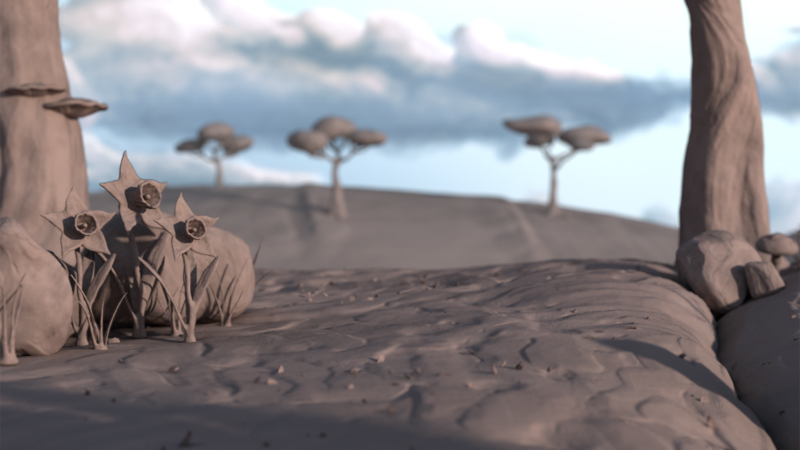
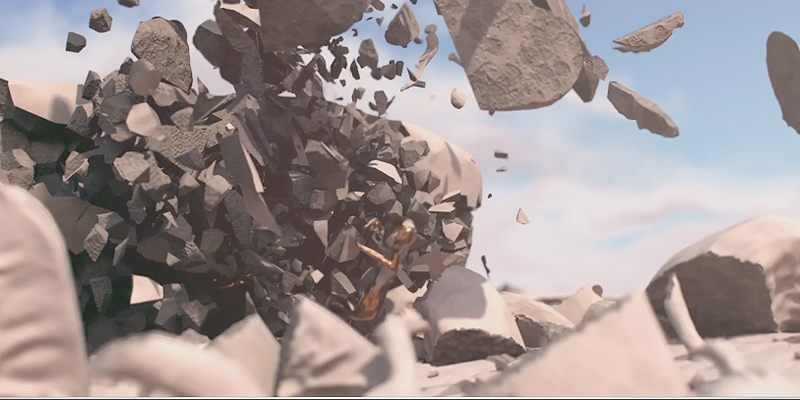
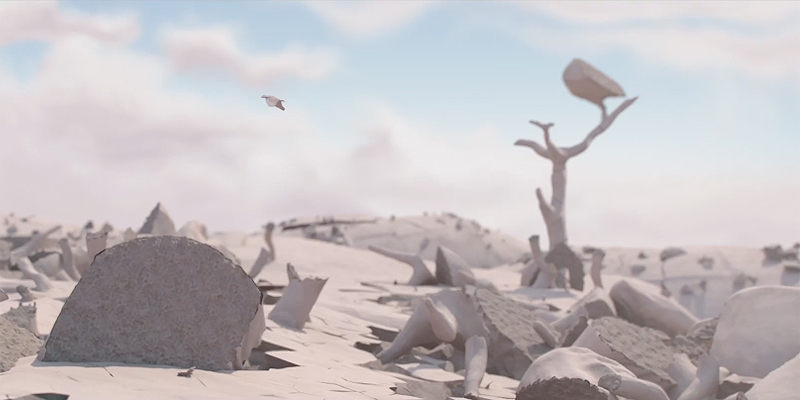
The main goal for the look of the film was to make a believable feel of the clay material, everything had to look hand sculpted. In order to achieve that goal we turned to Zbrush for the sculpting part. For the clay structure we mostly used the standard brushes within Zbrush. These basic tools gave us such great freedom to make everything look as if it was hand sculpted.
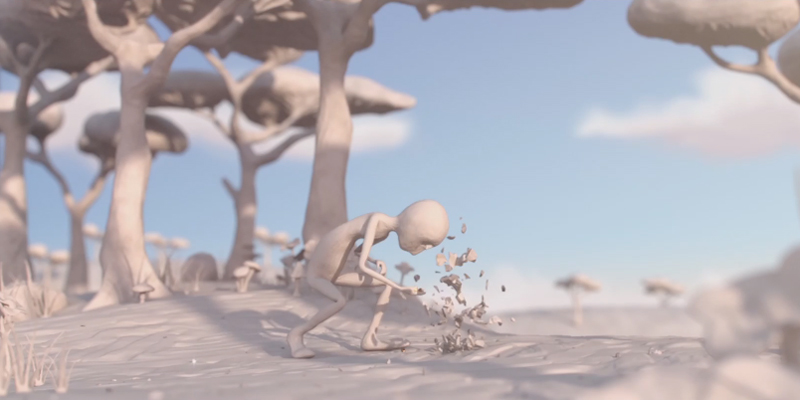
The simulations were all done with Pulldownit. We wanted to create a “cute” explosion, it had to feel tiny, like it all happened inside of a cardboard box. In order to do this we didn’t use any dynamic fields to make the pieces fly apart, instead we gave every piece a slight angular acceleration to give it a springy effect. We used particles to simulate smaller pieces, the emitter was connected to the inner material of the shattered pieces. These particles were driven by several expressions which influenced its motion parameters like angular velocity, to give them a dynamic feel.
What I liked most about Pulldownit was the straight-forward usability, everything
from shattering the object to baking the simulation was very clear and easy to use.
The dynamics properties were easy and fast compared to other dynamic engines, and
the different bounding volumes came in very handy while doing larger simulations.

The main render engine we used was V-ray. The three of us had worked with V-ray on several projects so it was our first choice. The shading of the clay world was just a simple V-ray shader, nothing too fancy because the clay look was achieved by sculpting and then applying the displacement maps on the low poly mesh. We knew the render times would be substantial because we used a lot of displacement maps. So in order to lower the render times we decided to use no reflection on our clay shader and we used the world position pass and the normal pass to do some relighting in Nuke in order to fake the reflection.

The shading of the character was a bit more advanced. It contains the clay shader but on top of that the facial expressions and the gold parts were done with displacement maps and animated masks which connect to the controls of set driven keys. The disadvantage for using displacement maps for facial expressions is that the animator cannot see his actions in the viewport, so animating would be a pretty clumsy and very time consuming task.
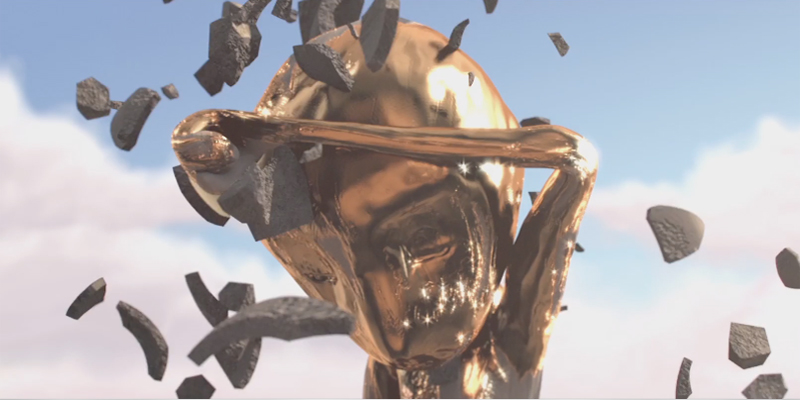
To avoid this we came up with a solution to use the switch material within V-ray. This allowed us to make a preview material for the animator to see his actions, and switch between different clay/gold shaders for final rendering all connected with set driven keys to the face GUI.
About the authors:

Niels Bosh

https://vimeo.com/nielsbosch

Jonathan Krijgsman

https://vimeo.com/jonathankrijgsman

Almar Sloot

https://vimeo.com/almarsloot